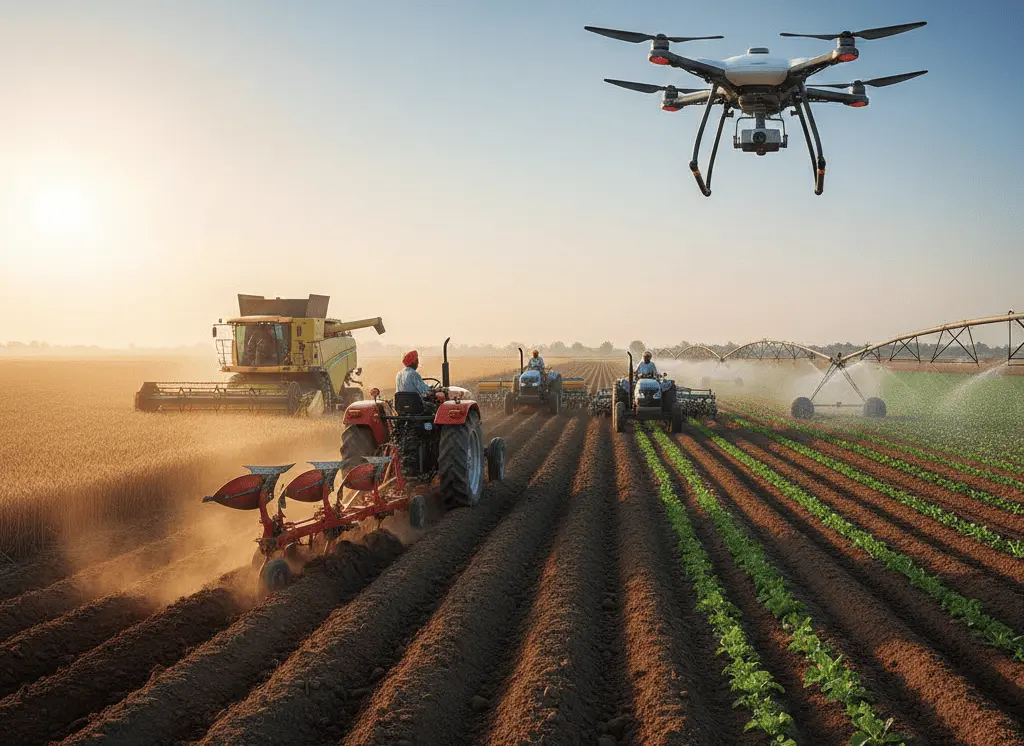
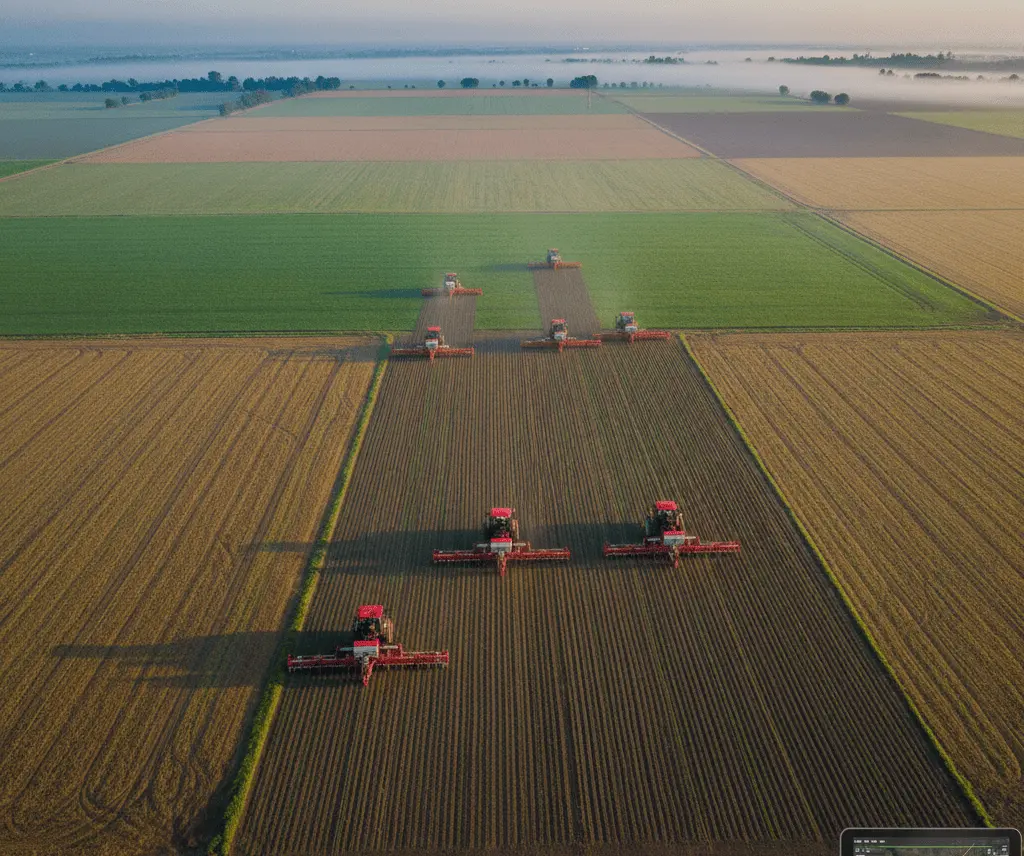
Farming today is no longer just about hard work — it is about smart work with the right machinery. One of the biggest mistakes farmers make is either buying oversized equipment that wastes money or using undersized tools that reduce productivity.
The size of your land plays a major role in deciding which agricultural machinery is right for you. Whether you own a small plot, medium farm, or large agricultural land, choosing the correct equipment can save time, reduce labor costs, and increase crop yield.
Let’s break it down in a simple and practical way.
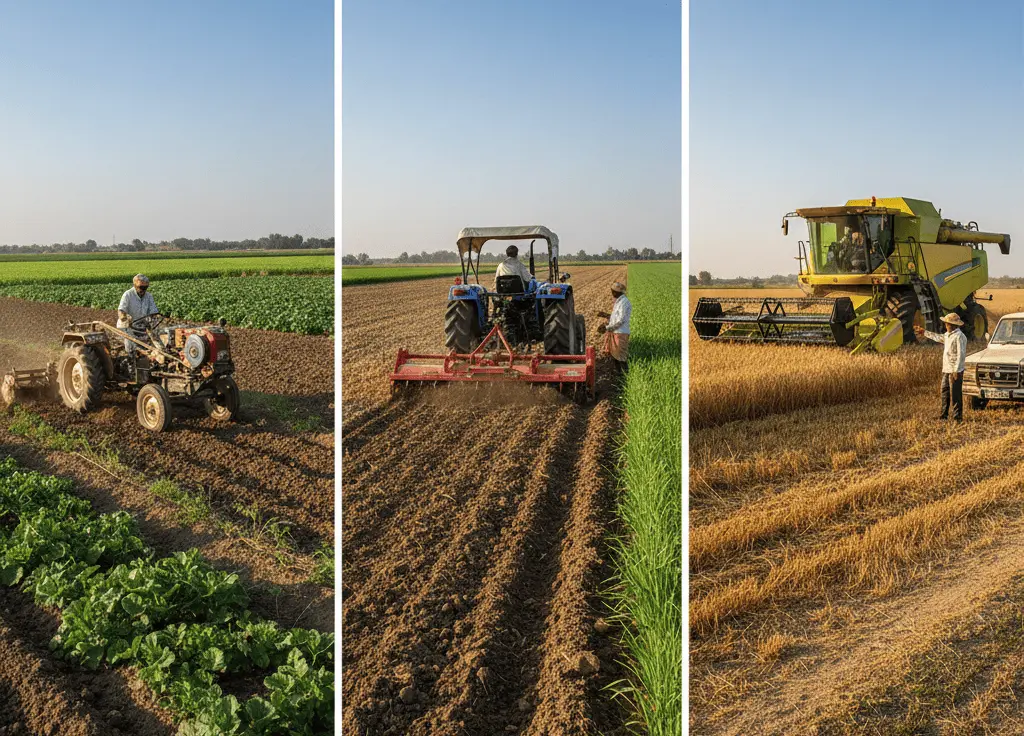
Why Land Size Matters When Choosing Farm Equipment
Every farm is different. The machinery that works well on 2 acres may be completely inefficient on 50 acres.
Choosing the right equipment based on land size helps you:
✔ Avoid overspending on large machines
✔ Reduce fuel and maintenance costs
✔ Complete farm operations on time
✔ Improve crop productivity
✔ Reduce dependency on manual labor
Farm mechanization should match your scale of farming, not just trends or what neighboring farmers are buying.
Farm Equipment for Small Land Holdings (Up to 5 Acres)
Small farmers often have limited budgets and smaller fields, so compact and multi-purpose equipment works best.
Ideal Machinery for Small Farms
- Mini Tractor (15–25 HP)
Perfect for small plots, orchards, and vegetable farming. Easy to maneuver in narrow spaces. - Power Tiller
A cost-effective option for plowing, tilling, and soil preparation in small fields. - Seed Drill (Small Size)
Helps in uniform seed sowing, saves seeds, and improves germination. - Sprayer (Manual or Battery Operated)
Ideal for applying fertilizers, pesticides, and herbicides efficiently. - Reaper or Mini Harvester
Useful for small-scale harvesting without hiring large machines.
Why Small Equipment is Better Here
- Lower investment
- Easy storage
- Lower fuel consumption
- Suitable for mixed cropping
Tip: Small farmers often benefit more from renting larger machines during peak seasons instead of buying.
Farm Equipment for Medium Land Holdings (5–20 Acres)
Medium farms need a balance between power and affordability. Operations must be completed quickly, especially during sowing and harvesting seasons.
Recommended Machinery
- Tractor (30–50 HP)
Versatile and powerful enough for plowing, tilling, hauling, and operating implements. - Rotavator
Prepares fine seedbeds and mixes crop residue into soil. - Seed Cum Fertilizer Drill
Saves time by sowing seeds and applying fertilizer simultaneously. - Cultivator
Used for soil loosening and weed control between crop rows. - Boom Sprayer
Covers larger areas faster than manual sprayers.
6. Thresher or Multi-Crop Harvester (Rental or Shared Use)
Efficient post-harvest processing.
Why Medium-Sized Machinery Works Best
- Faster field coverage
- Better time management
- Reduced labor dependency
- Higher productivity per acre
Many medium farmers choose a mix of owned basic equipment and rented advanced machines.
Farm Equipment for Large Land Holdings (20+ Acres)
Large farms require high-capacity and time-saving machinery to manage operations efficiently.
Essential Machinery for Large Farms
- High HP Tractor (50 HP and above)
Handles heavy implements and long working hours. - Disc Plough / Mould Board Plough
Deep plowing for better soil health. - Large Rotavator or Harrow
Quick soil preparation across large areas. - Precision Seed Drill or Planter
Ensures uniform spacing and high germination rate. - Combine Harvester
Performs reaping, threshing, and cleaning in one operation. - Self-Propelled Sprayer
Covers large fields quickly and evenly.
Benefits for Large Farms
- Massive time savings
- Reduced labor costs
- Efficient crop management
- Better yield consistency
Large farms benefit most from fully mechanized operations.
Key Factors to Consider Beyond Land Size
Land size is important, but you should also think about:
Type of Crops
Rice, wheat, maize, sugarcane, and vegetables all require different equipment.
Land Terrain
Hilly land may need lighter, compact machines. Flat land supports heavier equipment.
Labor Availability
If labor is scarce, invest more in mechanization.
Irrigation Method
Drip irrigation farms may require different machinery movement patterns.
Frequency of Use
If you only need a machine a few days a year, renting is smarter than buying.
Renting vs Buying Based on Land Size
Land Size | Best Strategy |
Small | Rent heavy machines, buy basic tools |
Medium | Buy tractor + core tools, rent harvesters |
Large | Buy most machinery, rent only specialized equipment |
This hybrid approach helps farmers control costs while staying productive.
Don’t Forget Maintenance Capacity
Buying big machines also means:
- Storage space
- Regular servicing
- Spare parts availability
- Skilled operator
If these are difficult to manage, renting becomes a better option.
Benefits of Choosing the Right Equipment Size
✔ Better fuel efficiency
✔ Lower repair costs
✔ Higher work efficiency
✔ Less soil compaction
✔ Improved crop yield
Right-sized machinery = maximum productivity with minimum waste.
Final Thoughts
There is no “one-size-fits-all” solution in farming. The best farm equipment for you depends mainly on:
✔ Your land size
✔ Crop type
✔ Budget
✔ Labor availability
✔ Frequency of use
Small farmers should focus on compact, multi-use equipment.
Medium farmers need balanced power and versatility.
Large farmers benefit most from high-capacity mechanized solutions.
And remember — renting equipment when needed is a smart financial decision, especially for machines used only a few days a year.
Choosing wisely today can lead to higher profits, lower stress, and better harvests tomorrow
FAQs
Q1. Which tractor is best for small farms?
Mini tractors between 15–25 HP are ideal for small farms.
Q2. Should small farmers buy a harvester?
Usually renting is more cost-effective than buying.
Q3. What equipment is essential for medium farms?
A 30–50 HP tractor, rotavator, seed drill, and sprayer.
Q4. Why is big machinery not suitable for small land?
It increases fuel cost, maintenance, and soil compaction.
Q5. How does the right equipment increase profit?
It saves time, reduces labor cost, and improves crop yield.