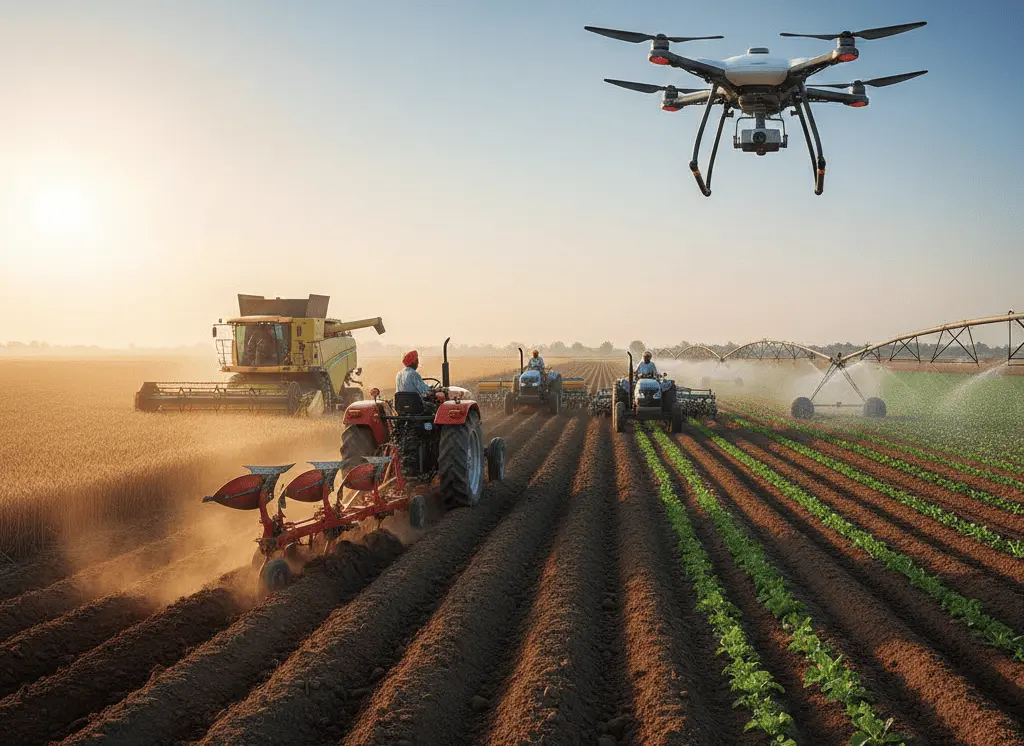
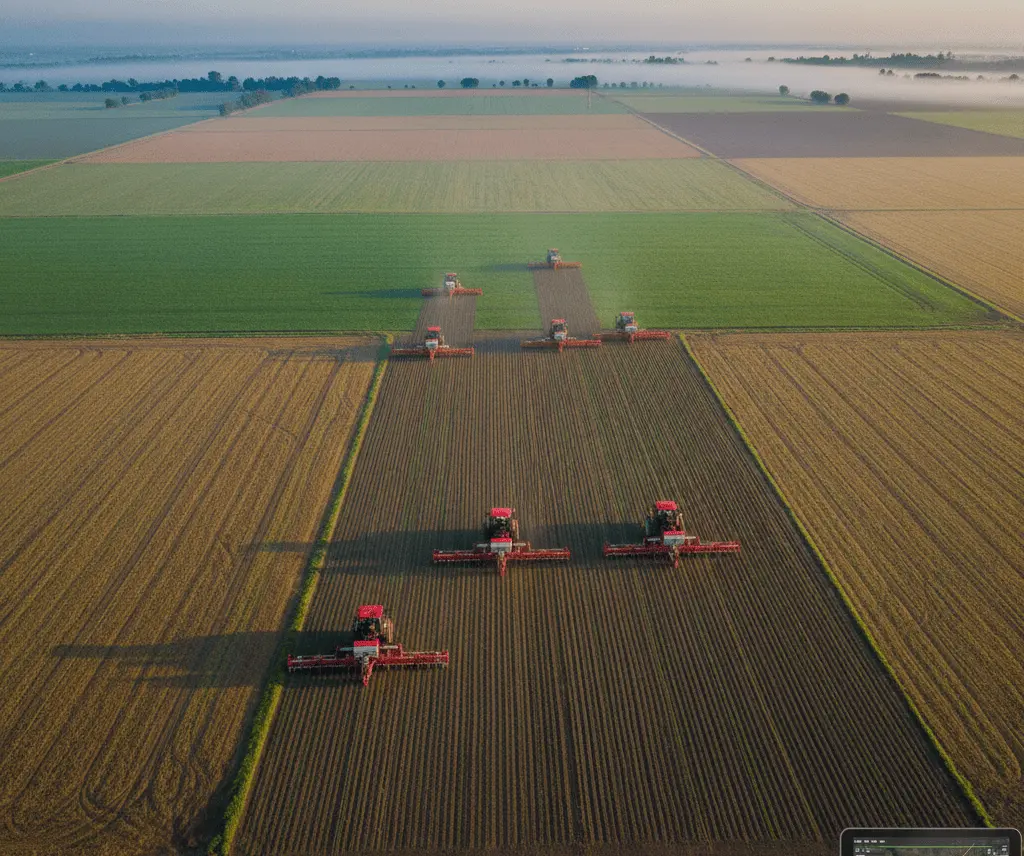
India’s agriculture is the backbone of the economy, providing food and livelihood to millions. Among the most important crops are wheat, rice, and maize, which are grown across various agro-climatic zones of the country. Modern farming is no longer possible with traditional methods alone—mechanization, precision farming, and proper farm equipment are essential for increasing crop yield, reducing labor dependency, and improving efficiency.
Choosing the right farm equipment is a critical decision for farmers, whether it’s for soil preparation, sowing, irrigation, crop protection, or harvesting. With the rising cost of machinery, farmers now have multiple options: buying, renting, or a hybrid approach. This comprehensive guide is designed to help Indian farmers make informed decisions, improve productivity, and increase profitability.
1. Introduction: Mechanization in Indian Agriculture
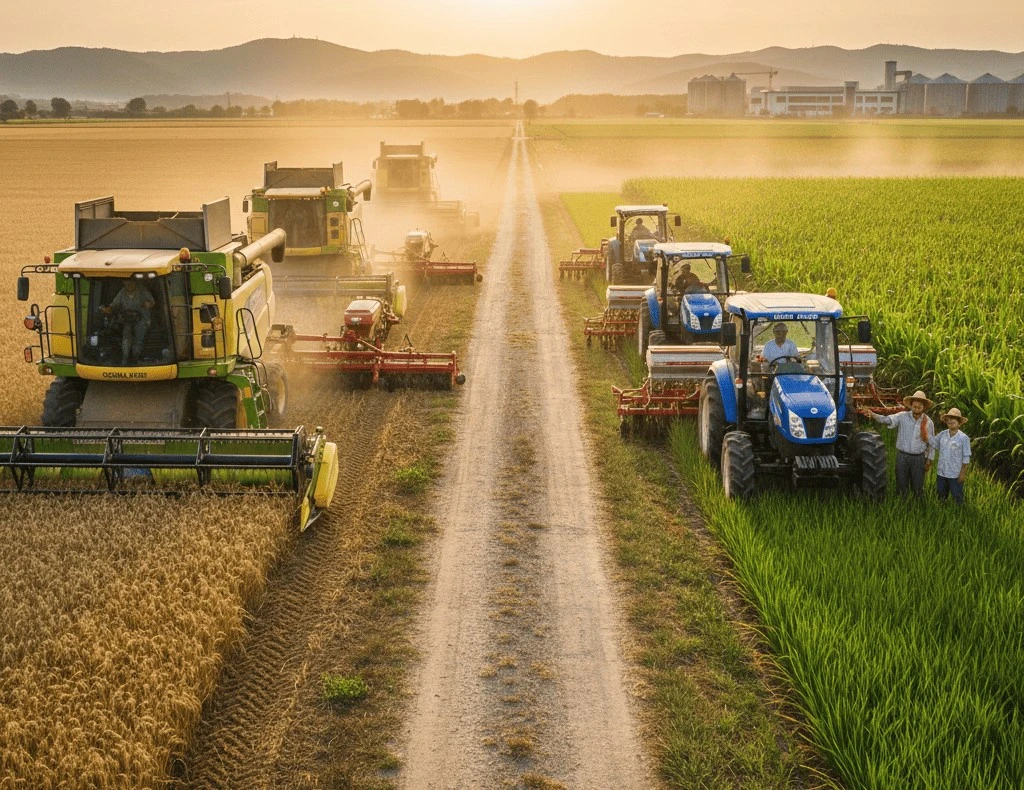
Indian agriculture has evolved rapidly over the past few decades. Labor shortages, rising input costs, and increasing demand for quality produce have made farm mechanization an inevitable part of modern farming.
Mechanization does more than just reduce manual labor; it ensures precision, efficiency, and profitability. Farmers growing wheat, rice, and maize face challenges like:
- Timely sowing and harvesting
- Weed management
- Fertilizer application
- Irrigation efficiency
- Crop protection
The solution lies in crop-specific farm machinery that can handle these tasks efficiently.
2. Why Modern Farm Equipment Is Essential
Modern farm equipment provides several advantages:
- Time Efficiency: Machines complete tasks in hours that would take days manually.
- Precision Farming: Seed drills, planters, and sprayers ensure uniform spacing, depth, and application.
- Labor Savings: Reduces dependency on seasonal labor and associated costs.
- Higher Yield: Uniform sowing and timely operations improve germination and crop growth.
- Post-Harvest Management: Combine harvesters and balers minimize losses.
- Sustainability: Machines like laser land levelers reduce water usage and optimize input efficiency.
3. Key Farm Equipment for Wheat Cultivation
Wheat is grown primarily in Punjab, Haryana, Uttar Pradesh, Madhya Pradesh, and Rajasthan. Its growth requires precise soil preparation, sowing, and harvesting.
3.1 Tractors
- Core of mechanized wheat farming
- Recommended 35–55 HP for small to medium farms
- Multi-purpose for plowing, sowing, transport
3.2 Seed Drills
- Uniform seed placement improves germination
- Types: Zero-till, multi-row, pneumatic seed drills
- Saves 20–30% seed compared to manual broadcasting
3.3 Rotavators and Cultivators
- Breaks clods, mixes residues, and prepares seedbeds
- Ensures optimal soil texture
3.4 Harvesters / Combine Harvesters
- Cuts, threshes, and cleans grains in one operation
- Essential for farms larger than 5 acres
- Reduces labor costs and post-harvest losses
3.5 Sprayers and Fertilizer Applicators
- Uniform pesticide, herbicide, and fertilizer application
- Tractor-mounted or handheld sprayers available
- Improves crop protection and yield
4. Key Farm Equipment for Rice Cultivation
Rice is grown across Punjab, West Bengal, Andhra Pradesh, and Tamil Nadu. It is water-intensive and requires specialized machinery.
4.1 Paddy Transplanters
- Mechanically transplant seedlings into puddled fields
- Reduces labor by 70–80%
- Ensures uniform spacing for better growth
4.2 Seed Drills / Direct Seeding Machines
- For regions adopting wet or dry direct seeding
- Saves nursery space and labor
4.3 Laser Land Levelers
- Ensures uniform water distribution
- Reduces water consumption by up to 20%
- Increases yield and prevents waterlogging
4.4 Tractors and Attachments
- Soil preparation and transport of seedlings
- Versatile for other farm operations
4.5 Combine Harvesters
- Essential for large-scale rice farms
- Reduces harvesting time and losses
5. Key Farm Equipment for Maize Cultivation
Maize is grown primarily in Maharashtra, Bihar, Karnataka, Andhra Pradesh, and Rajasthan. Precision sowing is critical.
5.1 Tractors
- Multi-purpose for plowing, sowing, and hauling
- Tractor horsepower depends on soil and field size
5.2 Seed Drills / Precision Planters
- Ensures uniform row spacing
- Reduces seed wastage
- Improves cob size and quality
5.3 Cultivators / Rotavators
- Soil preparation and weed management
- Ensures proper nutrient absorption
5.4 Harvesters
- Reduces dependency on labor
- Ensures timely maize harvesting
5.5 Sprayers
- Even application of fertilizers and crop protection chemicals
- Reduces disease risk
6. Renting vs Buying Farm Machinery
Advantages of Renting
- Low initial investment
- Access to latest technology
- Seasonal use without financial burden
- No maintenance or storage hassles
Advantages of Buying
- Full control over operations
- Long-term cost efficiency
- Opportunity to earn rental income
- Immediate availability during peak season
7. Mixed Models: Combining Renting and Buying
Many farmers adopt a hybrid approach:
Buy:
- Tractor
- Seed drill
- Rotavator / cultivator
Rent:
- Combine harvester
- Paddy transplanter
- Balers
- Drones
- Laser levelers
This approach reduces upfront investment and allows farmers to access advanced machinery without financial strain.
8. Maintenance, Care, and Longevity of Farm Equipment
- Clean machines after each use
- Lubricate moving parts
- Store in a covered shed
- Replace worn parts promptly
- Follow manufacturer service schedule
Well-maintained equipment can last 10–15 years, ensuring long-term profitability.
9. Government Schemes and Support
- Sub-Mission on Agricultural Mechanization (SMAM): Subsidies for buying tractors, seed drills, and harvesters
- Custom Hiring Centers (CHC): Affordable rental machinery
- State-specific schemes: Punjab, Haryana, Andhra Pradesh offer additional support
These schemes make mechanization accessible to small and marginal farmers.
10. Crop-Specific Machinery Planning
Crop | Essential Machines | Optional Machines |
Wheat | Tractor, Seed Drill, Rotavator | Harvester, Sprayer |
Rice | Paddy Transplanter, Laser Leveler | Harvester, Sprayer |
Maize | Tractor, Precision Planter, Cultivator | Harvester, Sprayer |
11. Technology in Modern Farming
- Drones: Crop monitoring, pesticide spraying, soil health mapping
- IoT & Sensors: Soil moisture, temperature, fertilizer management
- AI & Precision Farming: Data-driven decisions for higher yield
- Solar & Electric Machinery: Energy-efficient operations
12. Environmental and Sustainability Benefits
- Efficient machinery reduces water and fertilizer usage
- Reduces dependency on labor, lowering greenhouse gas emissions
- Shared machinery platforms reduce manufacturing waste
13. Real-Life Case Studies from Indian Farmers
- Punjab Wheat Farmer: Increased yield by 25% using a zero-till seed drill and combine harvester
- Bihar Maize Farmer: Reduced labor cost by 60% by renting precision planters
- West Bengal Rice Farmer: Improved irrigation efficiency by 20% with a laser land leveler
14. Cost-Benefit Analysis: Rent vs Buy
- Small farms (<5 acres): Renting is cost-effective
- Medium farms (5–20 acres): Hybrid approach is ideal
Large farms (>20 acres): Buying core machinery is profitable
15. Future Trends in Farm Equipment
- Subscription-based machinery services
- Cloud-based precision agriculture platforms
- Multi-crop smart seed drills
- Automated harvesting robots
FAQs – Everything Farmers Should Know
Q1. Can a single tractor handle all three crops?
Yes, with appropriate attachments for sowing, plowing, and hauling.
Q2. Is renting machinery profitable?
Yes, especially for seasonal machinery.
Q3. Can farmers earn by renting their machines?
Yes, many medium and large farmers generate extra income through custom hiring.
Q4. Which equipment is best for small farms?
Tractor, seed drill, rotavator, sprayer; harvesters can be rented.
Q5. Are subsidies available?
Yes, central and state government schemes support buying and renting machinery.
Conclusion and Strategic Recommendations
Mechanization is no longer optional; it’s essential for wheat, rice, and maize cultivation.
- Small farmers: Rent high-cost, seasonal machinery; buy core equipment
- Medium farmers: Adopt hybrid model
- Large farmers: Buy essential machines; rent advanced technology
The right farm equipment selection improves:
- Yield
- Efficiency
- Profitability
- Sustainability
By combining renting, buying, and technology adoption, Indian farmers can maximize productivity and secure their future.
Modern farming success is not about owning the most machines—it’s about using the right machine, at the right time, in the right way.