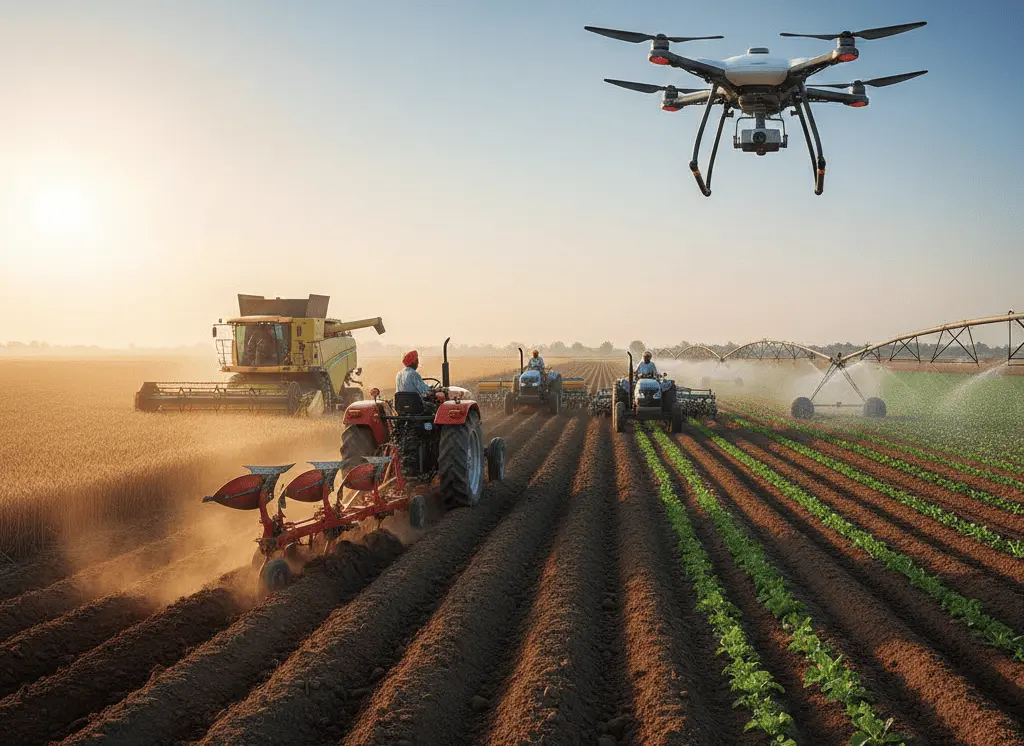
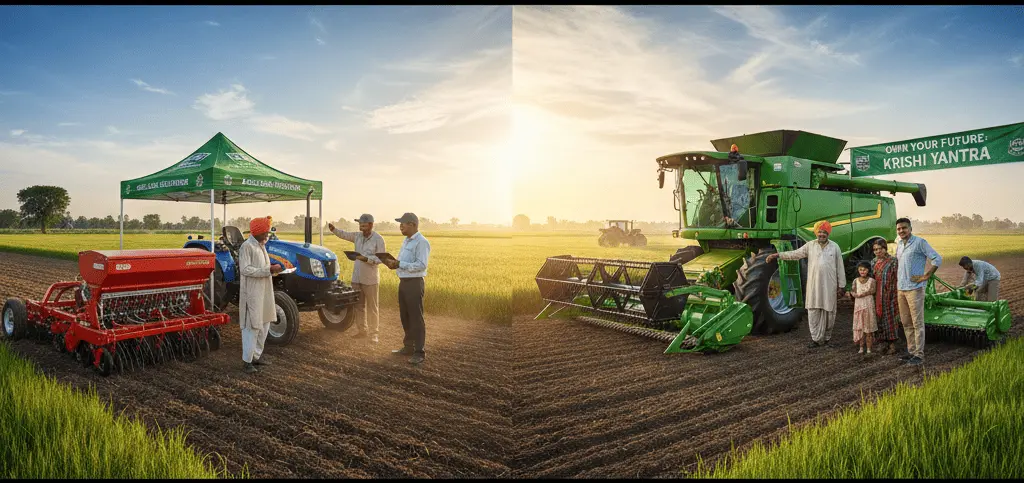
Agriculture in India is rapidly evolving, moving from traditional labor-intensive methods to mechanized and precision farming techniques. Among the most crucial stages of farming is sowing seeds, and this is where a seed drill becomes an indispensable tool for modern Indian farmers.
Traditional methods of sowing seeds manually or broadcasting them by hand come with several challenges:
- Uneven seed distribution
- Higher seed wastage
- Lower germination rates
- Reduced crop yield
A seed drill machine addresses all these issues, providing uniform depth, accurate spacing, and better soil coverage, ensuring maximum germination and optimum crop growth.
In this guide, we will cover:
- What a seed drill is and why it is important
- Types of seed drills used in India
- Crop-wise selection of seed drills
- How to choose the best seed drill for your farm
- Maintenance tips
- Frequently asked questions
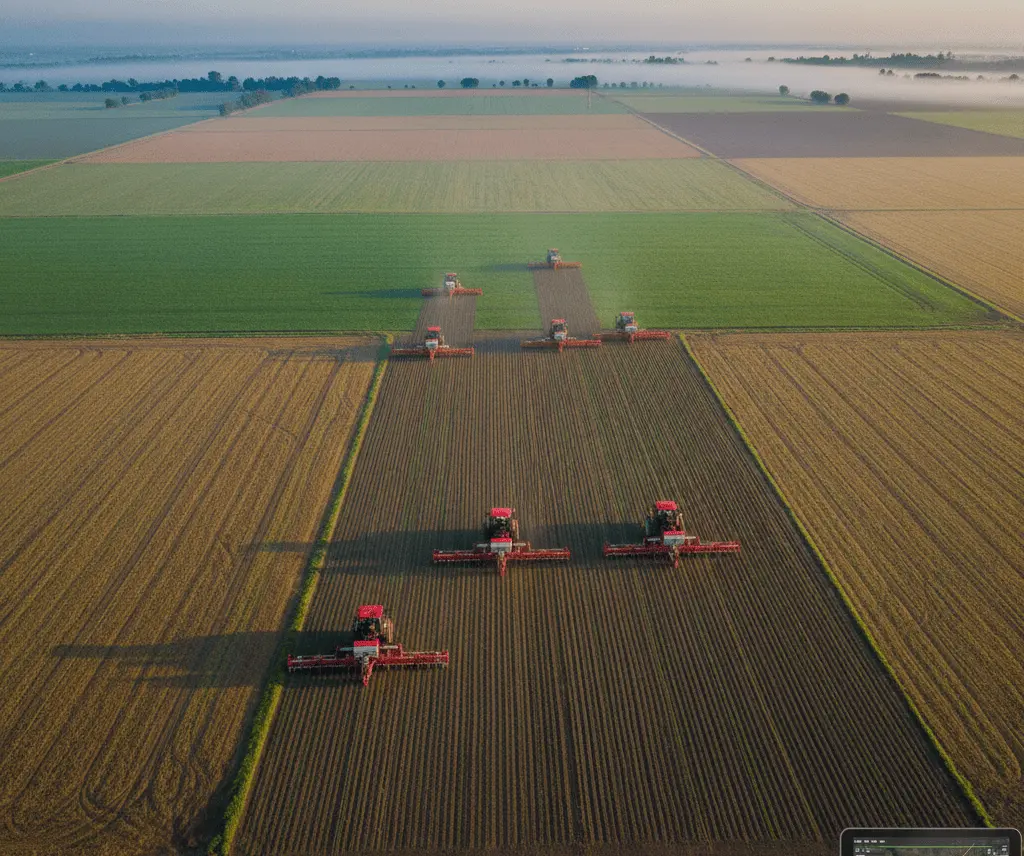
What is a Seed Drill?
A seed drill is an agricultural machine designed to sow seeds at the correct depth and spacing, covering them with soil immediately afterward. Unlike broadcasting, where seeds are scattered on the surface, seed drills ensure:
- Uniform germination
- Reduced seed wastage
- Faster sowing, especially before monsoon delays
- Higher crop yield and better crop quality
Importance of Seed Drills for Indian Farmers
Indian farms face unique challenges due to:
- Diverse soil types (black soil, red soil, alluvial, sandy soil)
- Small and marginal farm sizes
- Reliance on monsoon rains and weather variability
Using a seed drill offers significant advantages:
Key Benefits
- Uniform Crop Growth: Seeds planted at consistent depth and spacing grow evenly, leading to uniform crop stands.
- Seed Saving: Saves 20–30% of seeds compared to traditional broadcasting methods.
- Labour Efficiency: Reduces manual labor and speeds up the sowing process.
- Time-Saving: Covers large areas quickly, enabling timely planting.
- Higher Yield: Proper sowing leads to stronger plants and improved crop productivity.
Types of Seed Drills Used in India
- Traditional Mechanical Seed Drill
- Operated by a tractor, simple mechanical setup.
- Suitable for wheat, barley, and pulses.
- Widely used by small and medium-scale farmers.
- Multi-Row Seed Drill
- Sows multiple rows simultaneously.
- Saves time and reduces fuel consumption.
- Ideal for wheat, rice, and soybean fields.
- Zero-Till Seed Drill
- Plants seeds without plowing the soil first.
- Reduces soil erosion and retains moisture.
- Excellent for wheat cultivation after paddy harvesting.
- Pneumatic Seed Drill
- Uses air pressure to drop seeds into precise locations.
- Ensures highly accurate plant-to-plant spacing.
- Best suited for maize, cotton, sunflower, and other row crops.
- Happy Seeder
- Plants wheat directly over paddy residues.
- A sustainable solution for stubble management, preventing crop residue burning.
- Commonly used in Punjab, Haryana, and other northern states.
Best Seed Drill for Indian Farms (Crop-Wise Recommendations)
For Wheat
- Zero-Till Seed Drill or Multi-Row Seed Drill
- Ensures uniform sowing, better germination, and faster planting before monsoon delays.
For Maize
- Pneumatic Seed Drill
- Accurate spacing improves cob development and overall yield.
For Pulses
- Single-Row or Multi-Row Seed Drill
- Provides shallow sowing suitable for lentils, chickpeas, and beans.
For Oilseeds
- Precision Seed Drill
- Minimizes seed wastage and ensures uniform germination for crops like sunflower, soybean, and groundnut.
How to Choose the Best Seed Drill for Your Farm
- Farm Size
- Small farms → Traditional or single-row seed drill
- Large farms → Multi-row or pneumatic seed drill
- Crop Type
- Wheat, rice → Zero-Till or Multi-Row
- Maize, cotton → Pneumatic
- Soil Type
- Hard soil → Heavy-duty drill
- Soft or loamy soil → Light or medium-duty drill
- Tractor Compatibility
- Ensure tractor HP matches the seed drill requirements.
- Small seed drills → 35–45 HP tractors
- Advanced pneumatic drills → 50+ HP tractors
Government Support and Mechanization Schemes
The Indian government encourages farm mechanization through subsidies and schemes like:
- Sub-Mission on Agricultural Mechanization (SMAM)
- State-specific agriculture department incentives
Farmers can avail 40–60% subsidy on seed drills, reducing the initial investment burden.
Maintenance Tips for Seed Drills
- Clean the seed tubes and machine parts after every use to prevent clogging.
- Apply oil to metal parts to prevent rusting.
- Check bolts, chains, and gears regularly.
- Adjust depth and spacing settings according to crop requirements.
- Store in a dry shed or under a cover to extend lifespan.
Proper maintenance ensures that a seed drill can serve farmers reliably for 10–15 years.
Common Mistakes to Avoid
❌ Using the wrong type of seed drill for the crop
❌ Incorrect depth or spacing settings
❌ Ignoring tractor compatibility
❌ Skipping routine maintenance
The Future of Seed Drills in India
- Smart Seed Drills: Equipped with sensors for automatic depth and spacing adjustment
- GPS-Enabled Precision Farming: Ensures optimal seed placement across the field
- Electric or Low-Fuel Seed Drills: Eco-friendly and cost-efficient
- Integration with AI and IoT: Real-time monitoring of sowing and crop growth
FAQs – Best Seed Drill for Indian Farms
Q1. Which seed drill is suitable for small farms?
Simple traditional or single-row seed drill.
Q2. Is a zero-till seed drill good for wheat?
Yes, especially after paddy harvesting.
Q3. Can a seed drill save seeds?
Yes, seed saving can range from 20–30%.
Q4. Can one seed drill be used for multiple crops?
Yes, with proper adjustment of depth and spacing.
Q5. Are subsidies available for seed drills in India?
Yes, up to 60% subsidy under government schemes.
Q6. What tractor HP is needed for a seed drill?
Small drills → 35–45 HP, advanced drills → 50+ HP.
Q7. How often should seed drills be maintained?
After every sowing session and periodically for deeper checks.
Conclusion
Choosing the best seed drill for your farm is a critical decision for modern Indian farmers. With the right seed drill, you can:
- Increase crop yield
- Reduce seed wastage
- Save labor and time
- Improve crop uniformity
- Promote sustainable and modern farming
Whether you are a smallholder or a large farmer, adopting precision sowing technology ensures long-term productivity, profitability, and resilience against climate variability.
By selecting the right seed drill, Indian farmers can truly embrace modern farming and maximize their agricultural potential.